“I was convinced that leaving thoughts alone would lead to recovery but I was still getting sucked into internal compulsions around being “bad.”
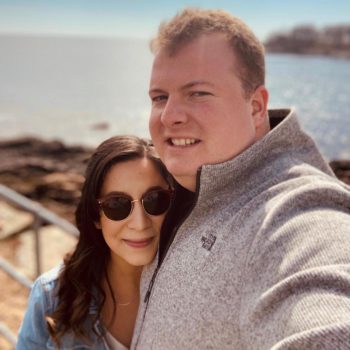
JOHN'S STORY.
When I think back to when I was a child I can see that I always had OCD to a certain degree.
When I was in elementary school and high school I began asking for reassurance from friends and family which increased over time — but it wasn’t until my last year of college that it became severe.
I began having constant intrusive thoughts (about many different themes — they would switch constantly). I had no idea what was happening — the anxiety just kept getting more intense. The harder I fought the stronger it became. I certainly didn’t think it was OCD because I didn’t have the typical outward compulsions — I was convinced I was losing my mind. It took a few years before a specialist diagnosed me. It felt like I was in a constant battle internally leading to bouts of depression — couldn’t sleep, eat, and could barely work (I lost a ton of weight). The rumination and internal compulsions were constant. My mind had me convinced I was an “awful person”.
I went to 5 therapists before finding Rob. Two of the therapists were specialists in OCD and were trained at top universities in the U.S. I thought they would lead me to recovery — they used ERP and mindfulness which helped but still didn’t get under the harm OCD.
I was convinced that leaving thoughts alone would lead to recovery but I was still getting sucked into internal compulsions around being “bad”. I was told that leaving thoughts alone and living with uncertainty was the best that could be done. I remember walking out of the office feeling helpless about my OCD.
A few months later I began working with Rob — he began almost immediately at working toward changing my relationship with anxiety, being a fallible human being (that can always choose to accept himself no matter what) and thinking rationally about events that were causing my anxiety. I thought this was not going to work because almost all OCD therapists say “not to engage with the content” — something that is not very helpful when you are terrified of something or convinced your evil”.
In a short time I began seeing a serious change — the biggest game changer by far was Unconditional Acceptance. It’s something that takes time to adopt and I’m still working at it, but I have seen a big improvement in my OCD.
Thoughts now provoke very little anxiety, due to adopting a more rational and accepting perspective. Many of the exposures we did were difficult but totally worth it. Don’t get me wrong — Rob reminds us the importance of exposures, changing your relationship to your thoughts, cutting back the internal work rate in your head, taking it for the ride, and living with uncertainty which are very helpful. The big difference is Rob also uses the methods of Albert Ellis to draw a roadmap of disputing irrational fears and seeing that “awful” and “terrible” are irrational beliefs that can be changed — the books he had me read were very important for this.
I find myself enjoying life again. Rob has helped me immensely and I am beyond grateful for his guidance. I never thought I would be where I am today. I still have some more work to do but have made great improvement. You can recover, it just takes some time and practice. Thank you Rob!
READ MORE STORIES.